Akston Health Akston Health

How to Prevent Choline Deficiency in Dairy Cows?

Time:2026-10-05 Author:Oliver
0%

The transition period can decide whether a dairy cow enters lactation smoothly or struggles with ketosis, poor appetite, and falling milk production. During the final weeks before calving, her energy demand rises sharply, while dry-matter intake often declines. The liver then receives a heavy flow of body fat. Choline supports phospholipid formation and helps transport fat from the liver, making it a practical nutrient in transition-cow management.

So, what happens if a dairy cow lacks enough choline in her diet? The answer is not perfectly simple. Choline deficiency may increase fat accumulation in the liver, weaken metabolic resilience, and reduce productive performance. However, the risk depends on diet quality, body condition, feed intake, disease pressure, and the availability of rumen-protected choline. NASEM’s Nutrient Requirements of Dairy Cattle, Eighth Revised Edition, notes that a fixed choline requirement has not been established for dairy cows. Research still shows potential benefits during stressful transition periods.

Cornell dairy nutrition specialist Dr. Tom Overton describes this period clearly: “The transition cow is the most important cow in the herd.” That reminder matters. A feeding program should not treat choline as a magic solution. It should evaluate forage quality, ration balance, liver health, and actual intake first. The Journal of Dairy Science has reported improved metabolic and lactation responses in several studies using rumen-protected choline. Yet results are not identical across farms. Careful records, professional ration formulation, and practical observation remain essential. A cow leaving feed behind beside a full bunk may be showing the earliest warning.
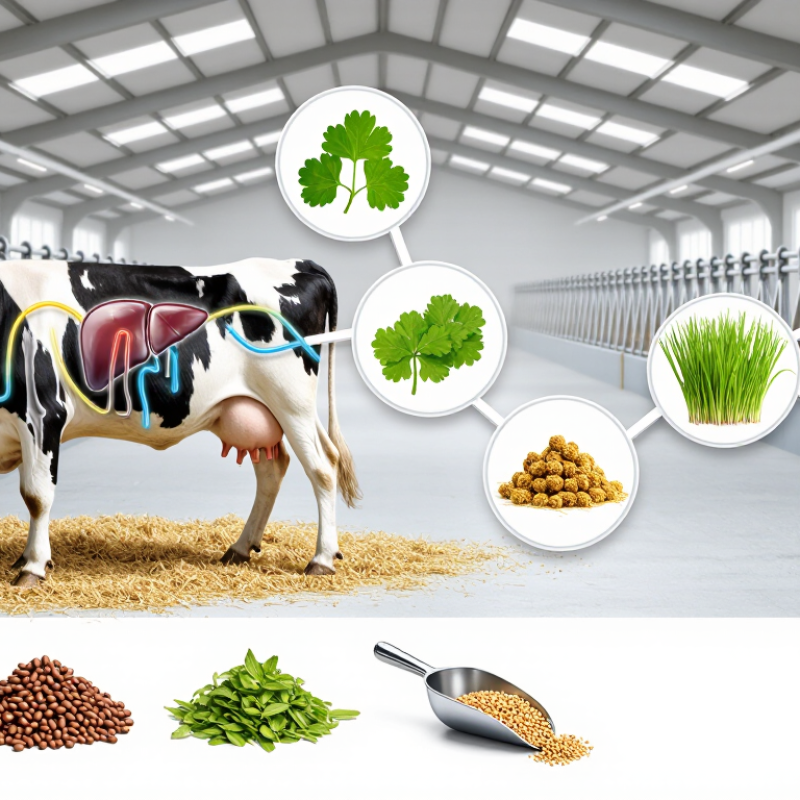
How to Prevent Choline Deficiency in Dairy Cows?

Understanding Choline’s Role in Dairy Cow Health

How to Prevent Choline Deficiency in Dairy Cows?

Choline supports liver function, fat transport, and cell membrane formation in dairy cows. Its importance increases during the transition period, when feed intake often falls while energy demands rise. A cow may mobilize body fat rapidly after calving. Without adequate support, fat can accumulate in the liver and increase the risk of metabolic disorders.

Rumen-protected choline is commonly considered because ordinary choline may degrade in the rumen. However, supplementation should follow a complete ration review. Check dry matter intake, body condition, forage quality, and other nutrients first. A dairy nutritionist or veterinarian can help assess whether the diet truly needs adjustment. More choline is not automatically better.

On farms, I would monitor fresh cows closely during the first three weeks after calving. Watch for reduced appetite, dull behavior, falling milk production, or excessive weight loss. These signs are not specific to choline deficiency. They may also indicate ketosis, poor transition management, or another health problem. Blood testing and accurate feed records provide stronger evidence than visual judgment alone.

Practical mistakes happen.

Keep feeding times consistent. Reduce sorting with suitable particle size and careful mixing. Review results across several weeks, rather than judging one cow or one day. Research supports choline’s role, but responses can vary with diet, genetics, health, and management. That uncertainty deserves attention.

Identifying Causes and Signs of Choline Deficiency

Choline deficiency in dairy cows rarely announces itself with one clear symptom. It develops when transition cows eat less while liver fat-processing demand rises. NASEM’s 2021 report notes that choline needs remain difficult to define because rumen microbes degrade much dietary choline. That uncertainty matters. Low intake, poor forage quality, heat stress, twins, and excessive body condition can increase risk.

The visible signs are often ordinary: reduced appetite, sluggishness, lower milk yield, and delayed recovery after calving. More specific clues may include ketosis, fatty liver, weak immune response, and poorer reproductive performance. However, these signs overlap with energy deficiency and metabolic disease. A diagnosis based on appearance alone is weak. Field studies report subclinical ketosis in roughly 20–40% of cows during early lactation. Rates vary by herd and testing method (McArt et al., 2012; Oetzel, 2017).

Veterinarians and nutritionists should combine feed records with blood beta-hydroxybutyrate, nonesterified fatty acids, liver enzymes, and liver triglyceride data when available. A repeated pattern across cows is more convincing than one abnormal sample. Rumen-protected choline may help selected transition cows, but results are inconsistent across trials. A meta-analysis reported stronger benefits for metabolic health than for milk volume (Arshad et al., 2020). Do not treat choline as a cure. Review dry-period body condition and bunk access before blaming the ration. That practical step is easy to miss.

How to Prevent Choline Deficiency in Dairy Cows? - Identifying Causes and Signs of Choline Deficiency

Area What Is Known Common Risk Factors or Indicators Practical Prevention or Management
Role of Choline Choline supports cell membranes, phosphatidylcholine formation, lipid transport from the liver, and methyl-group metabolism. These functions are especially important during the transition from late gestation to early lactation. Greater demand occurs when cows experience rapid changes in energy intake, high milk production, or increased mobilization of body fat. Evaluate choline as part of a complete transition-cow nutrition program rather than treating it as an isolated nutrient.
Most Vulnerable Period The highest practical risk is usually around calving and the first several weeks of lactation, when dry-matter intake may fall while nutrient requirements rise. Close-up cows, freshly calved cows, cows carrying twins, and cows with a history of metabolic disorders require closer monitoring. Begin nutritional planning before calving and continue monitoring through early lactation. Avoid abrupt ration changes.
Negative Energy Balance When energy intake is insufficient, body fat is mobilized and more fatty acids reach the liver. This can increase the need for effective lipid transport and may contribute to fatty liver. Low feed intake, rapid body-condition loss, elevated ketone bodies, reduced milk production, and increased risk of ketosis. Maximize dry-matter intake with adequate feed access, comfortable housing, consistent feed delivery, good-quality forage, and a properly balanced energy density.
Overconditioning Cows entering the dry period or calving at excessive body condition are more likely to experience reduced intake and greater fat mobilization after calving. Excessive body condition before calving, prominent loss of body condition after calving, and a history of fatty liver or ketosis. Use a controlled dry-period feeding strategy and aim for a moderate, consistent body condition. Avoid aggressive weight gain or weight loss close to calving.
Possible Signs Choline deficiency does not have one unique clinical sign. Possible effects are often associated with impaired liver lipid metabolism and poor transition performance. Reduced appetite, lower-than-expected milk yield, excessive body-condition loss, ketosis, fatty liver, delayed recovery after calving, and weaker reproductive performance. Treat these findings as warning signals requiring a broader investigation; do not diagnose choline deficiency from one sign alone.
Liver Health Choline is involved in phosphatidylcholine synthesis and the assembly of very-low-density lipoproteins, which help transport triglycerides out of the liver. Increased non-esterified fatty acids, elevated ketone bodies, poor appetite, and repeated cases of fatty liver within the transition group. Combine blood-metabolite monitoring, production records, body-condition scoring, and veterinary assessment to evaluate liver and energy status.
Feed Intake Reduced intake limits the supply of choline and other nutrients while increasing the risk of negative energy balance. Feed sorting, excessive competition at the feed bunk, overcrowding, heat stress, poor forage quality, and inconsistent feeding times. Provide adequate bunk space, fresh feed, clean water, comfortable resting areas, good ventilation, and frequent feed push-up.
Rumen Degradation Much of orally supplied choline can be degraded in the rumen. Therefore, research and commercial nutrition programs commonly focus on rumen-protected choline sources. A ration may contain choline on paper but deliver limited amounts to the small intestine if the form and protection are not appropriate. Ask a qualified nutritionist to review the choline source, protection technology, inclusion rate, mixing accuracy, and total ration formulation.
Supplementation Strategy Research results generally show that responses can vary with diet, stage of lactation, cow parity, health status, and the specific choline product used. Inconsistent responses may occur when the basal ration, energy balance, methionine supply, or transition management is not adequately controlled. Use a professionally formulated, rumen-protected choline program when appropriate. Follow the product’s validated feeding instructions and avoid assuming that a higher dose is always better.
Interaction with Other Nutrients Choline works within a broader methyl-donor and liver-metabolism system that includes nutrients such as methionine, folate, and vitamin B12. An imbalance or shortage of related nutrients can limit the response to choline supplementation. Review the complete ration, including metabolizable protein, amino acids, minerals, vitamins, and fermentable energy.
Monitoring Indicators No single routine laboratory test reliably confirms choline deficiency in an individual cow under field conditions. Monitor dry-matter intake, milk yield, milk components, body-condition score, ketone bodies, non-esterified fatty acids, displaced abomasum cases, and culling patterns. Compare groups over time and assess trends rather than relying on one measurement or one animal.
Reproductive Performance Poor transition health and severe negative energy balance can impair reproductive performance. Choline may support transition metabolism, but it is not a replacement for sound reproduction management. Delayed return to cyclicity, poorer conception results, increased days open, or more early-lactation health problems. Control metabolic disease, maintain appropriate body condition, provide accurate heat detection, and work with a veterinarian on reproductive evaluation.
When to Investigate A farm-level pattern is more meaningful than an isolated case. Repeated transition problems may indicate ration, management, disease, or nutrient-supply issues. Multiple cows with ketosis, fatty liver, low intake, excessive body-condition loss, or unexpectedly low early-lactation performance. Conduct a transition-cow audit covering feed analysis, ration mixing, forage quality, bunk management, cow comfort, disease records, and supplement delivery.
Key Takeaway Preventing choline deficiency is primarily part of preventing poor transition performance and excessive liver fat accumulation. The greatest concern is generally in cows with low intake, high metabolic demand, excessive body condition, or repeated transition disorders. Combine balanced nutrition, strong transition management, regular monitoring, and professional advice on rumen-protected choline supplementation.

Balancing the Diet to Supply Adequate Choline

Preventing choline deficiency starts with a balanced ration, not a single additive. Choline supports liver fat transport, cell membranes, and milk production during transition. However, NASEM’s 2021 dairy nutrition report does not provide one universal dietary choline requirement. Needs vary with dry matter intake, body condition, feed quality, and transition-cow stress.

Measure the ration carefully. A fresh cow eating less than 18 kilograms of dry matter may receive inadequate choline, even when the paper formulation looks correct. Check silage analysis, protein supply, energy density, and methionine balance.

Choline from ordinary feed ingredients is largely degraded in the rumen, so nutritionists often evaluate rumen-protected sources. Practical field programs commonly supply approximately 12 to 15 grams of absorbable choline daily, but the correct amount depends on product bioavailability and farm conditions.

Small details matter.

Observe manure, appetite, milk fat, and body-condition loss during the first three weeks after calving. A 2020 Journal of Dairy Science meta-analysis found that rumen-protected choline responses were generally positive but inconsistent across trials. That uncertainty matters.

More choline is not automatically better. I would avoid changing several nutrients at once, because the result becomes difficult to interpret.

Recheck ration dry matter and production records after two to four weeks. Feed efficiency may improve before milk volume visibly changes. That can be missed.

Using Rumen-Protected Choline Supplements Correctly

How to Prevent Choline Deficiency in Dairy Cows?

Using rumen-protected choline correctly requires more than adding powder to feed. Choline supports liver fat transport, cell membranes, and milk component synthesis. The NASEM 2021 dairy cattle report does not set one fixed choline requirement. Research evidence remains condition-dependent. Still, transition cows may benefit when negative energy balance increases liver stress.

Select supplements by actual metabolizable choline, not total product weight. Protection must survive rumen degradation and release choline in the intestine. Many commercial programs provide about 12–20 grams of effective choline daily, but the correct amount depends on product testing and herd conditions. Begin during late gestation and continue through early lactation. A Journal of Dairy Science meta-analysis reported modest, inconsistent improvements in milk production and liver indicators. The response is not guaranteed. Poor dry matter intake cannot be corrected with one additive.

Tips: Mix the supplement evenly in the total ration. Confirm the feeding rate with a nutritionist. Track dry matter intake, milk yield, fat, protein, and postpartum health. Review fresh-cow records after four weeks. Also check the label’s protection data. Some products list carrier weight prominently, which can confuse dosing. This detail deserves attention. USDA dairy health reports consistently identify the transition period as a high-risk stage, so management still matters most. Clean water, comfortable bedding, gradual diet changes, and adequate energy density should accompany choline supplementation.

Monitoring Cow Health and Adjusting the Feeding Program

How to Prevent Choline Deficiency in Dairy Cows?

Preventing choline deficiency starts with careful monitoring, not guesswork. Track dry matter intake, milk yield, body condition, and manure consistency each day. Fresh cows deserve special attention during the first three weeks after calving. A sudden intake drop can signal metabolic stress before visible illness appears. Watch cows around the feed bunk. Slow eating, sorting, or repeated visits may reveal ration problems. Review ketosis data, liver indicators, and transition-cow records with a qualified veterinarian or dairy nutritionist. These signs are useful, but none provides a complete diagnosis alone.

Adjust the feeding program when evidence points to inadequate choline supply or excessive fat mobilization. Use laboratory-tested ingredients and confirm the ration’s nutrient values regularly. A rumen-protected choline source may support liver function and fat metabolism, especially during the transition period. However, dosage should match the whole ration, herd stage, and production level. More is not always better. Mixing accuracy matters. A small error repeated daily can affect many cows. Recheck feed refusals, moisture changes, and particle size after every major ingredient change. No program is perfect. Records may also expose mistakes in our assumptions.

Tips: Score body condition consistently, preferably with the same trained observer. Compare fresh-cow intake with prepartum intake. Keep a simple weekly dashboard. Investigate patterns, not one unusual cow. Ask for professional review before making large ration changes. Monitor results for several weeks, then adjust carefully.

How to Prevent Choline Deficiency in Dairy Cows

Monitoring cow health and adjusting the feeding program

Feeding guidance: Practical transition-cow programs commonly provide approximately 12–20 g of rumen-protected choline per cow per day during the close-up, fresh, and peak-lactation periods. The exact amount should be adjusted according to ration analysis, dry matter intake, body condition, milk production, and veterinary or nutritionist assessment.

Health monitoring: Watch for reduced dry matter intake, excessive body-condition loss, elevated blood β-hydroxybutyrate, poor early-lactation performance, and signs of fatty liver. Choline supplementation should support, not replace, adequate energy density, fiber, protein, mineral balance, and consistent feed management.

FAQS

What can cause choline deficiency in dairy cows?

Risk rises when cows eat less during transition. Heat stress, poor forage, twins, and excess body condition may contribute.

What signs may suggest choline deficiency?

Watch for poor appetite, sluggishness, reduced milk yield, and slow recovery after calving. Fatty liver, ketosis, weak immunity, and reproductive problems may also appear.

Can appearance alone confirm choline deficiency?

No. The signs overlap with energy deficiency and other metabolic disorders. One weak-looking cow does not prove a deficiency.

Which tests can help investigate the problem?

Combine feed records with blood beta-hydroxybutyrate, nonesterified fatty acids, and liver enzymes. Liver triglyceride data may add useful detail.

How should the ration be checked?

Review dry matter intake, silage quality, protein, energy density, and methionine balance. A fresh cow eating below 18 kilograms of dry matter needs closer attention.

How much absorbable choline might transition cows receive?

Field programs often provide about 12–15 grams daily. Some products deliver 12–20 grams of effective choline. Product bioavailability still matters.

When should rumen-protected choline supplementation begin?

Many programs begin during late gestation and continue through early lactation. Mix it evenly into the total ration.

What should be monitored after supplementation?

Track feed intake, milk yield, milk fat, protein, manure, and body-condition loss. Review records after two to four weeks.

Does more choline always produce more milk?

No. Research shows modest and inconsistent production responses. Metabolic health may improve before milk volume changes.

What management steps should accompany supplementation?

Provide clean water, comfortable bedding, steady diet changes, and adequate energy density. An additive cannot repair poor bunk access. That is easy to miss.

Conclusion

Choline plays an important role in dairy cow health, especially during late pregnancy and early lactation. It supports fat transport from the liver, energy metabolism, cell structure, and efficient use of nutrients. When cows experience high production demands, low feed intake, poor-quality forage, or an unbalanced ration, their choline supply may become inadequate. Farmers should understand what happens if a dairy cow lacks enough choline in her diet: she may show reduced appetite, excessive body condition loss, poor milk production, weakened fertility, or a greater risk of metabolic problems.

Prevention begins with a well-balanced diet that provides sufficient energy, protein, minerals, and natural choline sources. Because much dietary choline can be broken down in the rumen, rumen-protected choline supplements may help deliver more choline to the intestine when used according to professional feeding guidance. Their inclusion should match the cow’s production stage, health status, and overall ration. Regular monitoring of feed intake, body condition, milk yield, reproductive performance, and liver-related health indicators allows farmers to adjust the feeding program promptly and maintain consistent herd performance.

Oliver

Oliver

Oliver is a seasoned marketing professional with a wealth of expertise in driving brand awareness and engagement. With a deep understanding of our company's product offerings, he consistently delivers high-quality content that enriches our professional blog. His insights not only shed light on......