Akston Health Akston Health

China Top Mycotoxin Binders What Are Hidden Signs in Cattle?

Time:2026-09-20 Author:Oliver
0%

In cattle, mycotoxin exposure rarely begins with a dramatic collapse. It often appears as small changes across the herd. Feed intake may fall slightly, milk production may soften, and manure can become unusually loose. Some cows look normal while fertility, immunity, or growth quietly declines.

So, what are the hidden signs of mycotoxin poisoning in cattle? Watch for repeated feed refusal, unexplained weight loss, rough coats, lower conception rates, swollen udders, or more frequent digestive problems. Calves may grow unevenly. Cows may also respond poorly to routine health management. These signs are not proof of mycotoxin poisoning. Heat stress, poor forage, infection, mineral imbalance, and management errors can look similar.

A reliable assessment combines careful observation with feed testing and veterinary review. Check silage faces, grain dust, clumping, moisture, and storage damage. Keep clear records of ration changes, milk yield, somatic cell counts, fertility, and health treatments. Laboratory results matter, but one sample may not represent every feed batch. That limitation is easy to forget.

China’s leading mycotoxin binders can support a broader risk-control program when selected for the relevant toxins and used at verified rates. They should not replace clean storage, quality ingredients, or professional diagnosis. Product claims also require careful scrutiny, because binding performance differs between toxins and feed conditions. Practical decisions should follow evidence, herd history, and local veterinary guidance. Small details matter. The goal is not to chase every symptom, but to identify patterns early and protect cattle welfare, productivity, and feed safety.
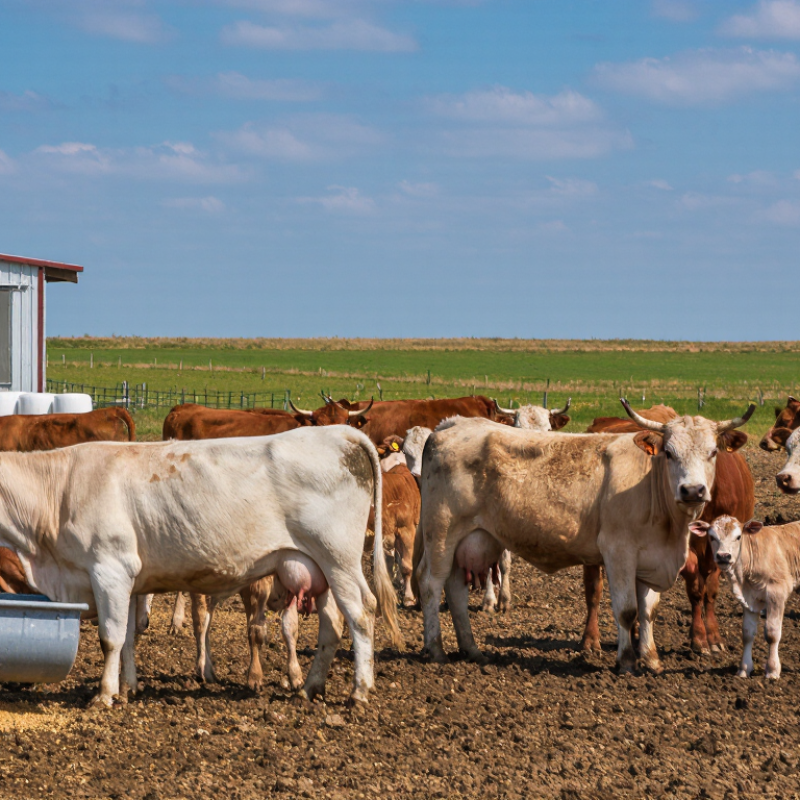
China Top Mycotoxin Binders What Are Hidden Signs in Cattle?

Hidden Mycotoxicosis in Cattle: AFB1 Limits—20 ppb FDA, 5 ppb EU

Hidden mycotoxicosis often develops quietly in cattle. Feed intake may fall slightly, while milk yield, fertility, and body condition decline. Loose manure, dull coats, and irregular breeding can appear first. These signs are not proof of aflatoxin exposure. They may reflect several stresses together.

Aflatoxin B1 deserves careful attention because cattle convert it into aflatoxin M1 in milk. The U.S. Food and Drug Administration lists 20 ppb as the action level for feed intended for dairy animals. European feed rules set a stricter limit of 5 ppb for complete feed for dairy cattle. These limits are not interchangeable; sampling methods and feed categories matter. One laboratory result can mislead when contamination is uneven.

The 2024 World Mycotoxin Survey reported continued detection of multiple mycotoxins across global feed ingredients, including maize and maize by-products. Co-contamination can make cattle appear “mildly sick” rather than clearly poisoned. That is the difficult part. A clean-looking ration proves little.

On farms, test incoming lots, retain samples, and compare results with milk performance records. Watch fresh cows closely, especially during humid storage periods. Mycotoxin binders may support risk management, but they cannot replace moisture control, representative testing, or veterinary assessment. Some binders perform differently against different toxins. This detail is often underestimated. Controls should be reviewed against FDA guidance, European limits, and current laboratory evidence.

Milk Aflatoxin M1 at 0.5 μg/kg: China’s Dairy-Safety Benchmark

In China’s dairy-safety system, milk aflatoxin M1 at 0.5 μg/kg is a critical benchmark. It is not a visible warning light. A tanker can look normal while contamination remains measurable. Aflatoxin B1 from poorly stored feed is converted in the liver and may appear in milk as aflatoxin M1.

Cattle often show quiet, non-specific signs. Feed intake may fall slightly. Milk yield can decline without obvious illness. Rough coats, slower growth, loose manure, or repeated immune problems may also appear. These signs do not prove aflatoxin exposure. Heat stress, mold mixtures, poor ration balance, and infection can look similar.

Look closely at feed storage. Warm grain, damp silage, clumped pellets, and a musty smell deserve immediate attention. Laboratory testing of feed and bulk milk is more reliable than eyesight. Sampling should represent different feed lots and milking periods. A mycotoxin binder may reduce absorption risk, but it cannot repair spoiled feed or replace testing. Dosage, mixing quality, and the toxin profile all matter.

In practice, records are easy to underestimate. A small yield drop may be dismissed as seasonal variation. That judgment can be wrong. Reviewing feed intake, milk data, liver-related indicators, and test results together gives a stronger picture. The 0.5 μg/kg level should guide action, not encourage complacency.

Hidden Field Signs: Reduced Intake, Liver Stress, Immunity, and Fertility

China Top Mycotoxin Binders: What Are Hidden Signs in Cattle?

Mycotoxin exposure often begins quietly in cattle. Reduced feed intake may appear before visible illness. Cows may leave fine particles in the bunk. Milk yield can then decline unevenly across the group. The 2023 FAO report estimates that about 25% of global crops are affected by mycotoxins. However, contamination varies by crop, storage condition, and region. Liver stress may show as dull hair, loose manure, or slower recovery after calving. These signs are not proof. They require testing and careful records.

Immune pressure is another field signal. More cases of mastitis, respiratory disease, or poor vaccine response may indicate broader management problems. Fertility can also suffer through weaker heat expression, delayed conception, or early embryonic loss. A 2020 EFSA assessment confirmed that aflatoxin B1 in feed can transfer into milk as aflatoxin M1. The carryover is limited, but it remains a food-safety concern. Research also links several mycotoxins with impaired gut and reproductive functions. Evidence is not equally strong for every toxin. That distinction matters.

Tips: Test representative feed samples, not only visibly moldy portions. Check intake, milk yield, manure, liver enzymes, and reproductive records together. Choose a binder according to the detected toxins and its verified binding spectrum. No single product fits every challenge. Review storage moisture and feed turnover weekly. Our records are rarely perfect. That is exactly why small changes should be documented early.

China Top Mycotoxin Binders What Are Hidden Signs in Cattle? - Hidden Field Signs: Reduced Intake, Liver Stress, Immunity, and Fertility
Field Dimension Hidden Field Sign What It May Indicate Practical Confirmation Action Priority
Feed Intake Dry-matter intake falls by more than 5% from the farm's recent baseline, with sorting, slower eating, or increased feed refusals. Reduced palatability, gastrointestinal irritation, ration inconsistency, heat stress, disease, or possible mycotoxin exposure. Compare daily dry-matter intake with the previous 7–14-day baseline. Check moisture, heating, moldy areas, particle size, feed storage, and ration delivery accuracy. High
Milk Performance A gradual decline in milk yield or milk-fat production without a clear change in genetics, lactation stage, ration energy, or weather. Lower feed intake, rumen disturbance, impaired nutrient use, or a concurrent health problem. Mycotoxins are only one possible cause. Review rolling 7-day milk records, fat-to-protein ratio, rumination activity, feed analysis, and recent ration changes. High
Body Condition Unexpected body-condition loss, delayed recovery after calving, or uneven condition across cows receiving the same ration. Negative energy balance, reduced intake, poor nutrient absorption, chronic inflammation, or liver-related metabolic stress. Score body condition consistently every 2–4 weeks and compare results by parity and days in milk. Investigate ketosis, displaced abomasum, parasites, and ration energy before assigning blame to mycotoxins. High
Liver Stress Loss of appetite, reduced production, poor body condition, or increased susceptibility to secondary disorders without an obvious single cause. Possible hepatic overload or impaired liver function; certain mycotoxins can affect the liver, but clinical signs are nonspecific. Use veterinary evaluation and, when justified, blood chemistry such as AST, GGT, GLDH, bilirubin, and bile acids. Interpret results against herd history and laboratory reference ranges. High
Rumen and Manure Loose manure, undigested feed particles, variable fecal consistency, or more visible feed sorting. Rumen fermentation imbalance, rapid diet change, excess starch, poor fiber effectiveness, infection, or intestinal irritation. Check physically effective fiber, starch level, ration mixing, water access, fecal screening, and feed particle distribution. These signs do not uniquely diagnose mycotoxins. Medium
Immune Function More frequent cases of mastitis, metritis, respiratory disease, diarrhea, slow recovery, or increased treatment failures. Weakened immune resilience may be associated with mycotoxin exposure, but hygiene, housing, vaccination, nutrition, and pathogen pressure are often stronger contributors. Track disease incidence, somatic-cell-count trends, treatment response, vaccination records, ventilation, bedding cleanliness, and pathogen results. High
Calf Health Inconsistent starter intake, recurrent diarrhea, slow growth, rough hair coat, or greater susceptibility to respiratory illness. Contaminated starter or forage, inadequate passive transfer, poor hygiene, environmental stress, or dietary imbalance. Measure serum total protein or Brix for passive-transfer monitoring, record average daily gain, inspect calf-feed storage, and test suspect feed using a validated laboratory method. High
Fertility Delayed return to estrus, weaker heat expression, poorer conception, more early embryonic loss, or irregular reproductive performance. Energy deficit, heat stress, uterine disease, inadequate trace minerals, disease, or possible reproductive effects from certain mycotoxins. Review days to first service, conception rate, pregnancy loss, body condition, ovarian activity, uterine health, heat detection, and reproductive records by group. High
Feed Storage Heating, caking, visible mold, musty odor, wet pockets, damaged kernels, or condensation inside silage and grain storage. Conditions that support fungal growth and uneven distribution of mycotoxins. Visible mold does not reliably predict toxin concentration. Inspect the entire storage face and feed-out area, remove spoiled material, improve sealing and feed-out rate, and submit representative composite samples for analysis. High
Seasonal Pattern Problems appear or worsen after a change in grain, silage, straw, weather pattern, storage period, or supplier lot. Changes in contamination risk or ration exposure. Mycotoxin levels can vary substantially between loads and within a single storage unit. Link health and performance records to feed-lot numbers, harvest conditions, storage dates, and laboratory results rather than relying only on visual inspection. Medium
Testing and Diagnosis Several mild, nonspecific signs occur together across a group, especially after a feed change. Possible multi-factor feed problem, including mycotoxins, but also ration imbalance, infectious disease, heat stress, or management failure. Use representative sampling, validated analytical methods, veterinary review, and comparison with animal-performance data. A single negative sample cannot always exclude uneven contamination. High
Response Monitoring Intake, production, manure quality, or disease frequency improves after the suspected feed source is corrected. Supports a feed-related explanation but does not prove that mycotoxins were the sole cause. Compare 7-, 14-, and 28-day trends before and after corrective action. Record ration changes, storage corrections, veterinary treatments, and environmental conditions. Medium
Interpretation note: Mycotoxin-related signs in cattle are often subtle and nonspecific. Reduced intake, liver stress, immune challenges, and fertility changes should be investigated as a herd-level pattern. Feed testing, complete ration review, veterinary assessment, and accurate production records are needed before making a diagnosis or selecting a control strategy.

Comparing China’s Top Binders: Adsorption, Biotransformation, and Gut Protection

China’s leading mycotoxin binders are not identical in how they protect cattle. Adsorption products work like a surface trap. They can bind certain toxins in the rumen and reduce their movement into the intestine. Their performance depends on toxin type, dose, feed moisture, and contact time. A broad laboratory claim does not always predict field results.

Biotransformation products use enzymes, microbes, or other biological components to change toxins into less harmful compounds. This approach may support toxins that bind poorly to mineral surfaces. However, activity can vary with storage temperature and rumen conditions. Feed managers should request stability data and independent testing. Gut-protection formulas add another layer. Yeast fractions, plant compounds, or functional fibers may support the intestinal barrier and microbial balance. The pattern matters.

Hidden signs in cattle are often quiet. A fresh group may show uneven manure, reduced cud chewing, lower conception rates, or unexplained feed refusal. Milk yield can decline before visible illness appears. In practice, I would compare these observations with feed analysis, liver indicators, and ration changes. Testing one sample is useful, but it can miss uneven contamination. No binder is perfect. I have also seen attractive trial results fail when mixing was poor. That detail deserves more attention. A practical comparison should measure toxin reduction, rumen compatibility, gut response, intake, and animal performance under local feeding conditions.

Verification Metrics: Feed AFB1, Milk M1, FCR, and 7–14-Day Response

China Top Mycotoxin Binders: What Are Hidden Signs in Cattle?

Hidden mycotoxin stress may appear as softer manure, uneven intake, dull coats, or reduced conception. These signs are not proof. Heat, poor forage, parasites, and ration changes can look similar. A reliable assessment starts with feed AFB1 testing from several sampling points, not one handful. Use a qualified laboratory and record sampling time, storage conditions, moisture, and ration composition.

Milk M1 offers another verification point. Compare results with the same cows, feed batch, and production stage. A falling milk M1 level may support binder activity, but dilution from higher milk volume can mislead interpretation. Check dry matter intake, milk yield, milk components, body condition, and veterinary findings beside the laboratory report.

FCR should be tracked by group, not guessed from daily impressions. Record feed delivered, refusals, weight gain, and days on test. Look for measurable changes within 7–14 days, while recognizing that this window is useful but imperfect. Some cattle respond slowly. Others improve because the ration changed. I would repeat feed AFB1 and milk M1 testing before making a firm claim. Cleaner samples, consistent records, and transparent limitations make results more credible.

FAQS

What does the 0.5 μg/kg aflatoxin M1 level mean?

It is a critical dairy-safety benchmark in China. Milk may look normal. Laboratory testing is still necessary.

How can aflatoxin B1 reach milk?

Poorly stored feed may contain aflatoxin B1. The liver can convert it into aflatoxin M1. This residue may then appear in milk.

Which field signs may suggest mycotoxin exposure?

Cattle may eat less, leave fine feed particles, or produce less milk. Dull coats, loose manure, and slow recovery can also occur. These signs are not proof.

Can reduced fertility be linked with mycotoxin pressure?

Possible signs include weak heat expression, delayed conception, and early embryonic loss. However, infection, ration problems, and heat stress can produce similar results.

What feed-storage details deserve immediate attention?

Check warm grain, damp silage, clumped pellets, and musty odors. These details can reveal storage problems before cattle appear sick. Look carefully.

How should feed and milk samples be collected?

Test representative samples from several feed lots and sampling points. Include different milking periods when testing bulk milk. One handful is not enough.

Can a mycotoxin binder replace clean feed or laboratory testing?

No. A binder may reduce absorption risk, but it cannot repair spoiled feed. Dosage, mixing quality, and toxin type also matter.

Which measurements help verify improvement?

Compare feed AFB1, milk M1, dry matter intake, milk yield, and milk components. Track body condition, manure, liver indicators, and reproductive records too.

How quickly might results appear after an intervention?

Review measurable changes within 7–14 days. This period is useful, but imperfect. Some cattle respond slowly, while ration changes may explain improvement.

How should milk M1 results be interpreted?

Compare the same cows, feed batch, and production stage. Higher milk volume can dilute M1 results and create a misleading impression. I would repeat testing before making a firm claim.

Conclusion

Hidden mycotoxicosis in cattle can develop without dramatic symptoms, making early recognition essential. Producers should understand what are the hidden signs of mycotoxin poisoning in cattle, including reduced feed intake, slower growth, poorer feed conversion, liver stress, weakened immunity, recurring illness, and declining fertility. Aflatoxin B1 contamination deserves particular attention, with commonly referenced limits of 20 ppb in the United States and 5 ppb in the European Union. In dairy animals, aflatoxin M1 in milk should also be monitored, with 0.5 μg/kg serving as China’s dairy-safety benchmark.

China’s leading mycotoxin binders can be evaluated by three main functions: physical adsorption, enzymatic or microbial biotransformation, and gut-barrier protection. A practical verification program should track feed AFB1, milk M1, feed conversion ratio, intake, manure consistency, health events, and reproductive performance. Changes observed within 7–14 days may provide useful early evidence, but results should be confirmed through consistent sampling, laboratory testing, and longer-term herd records.

Oliver

Oliver

Oliver is a seasoned marketing professional with a wealth of expertise in driving brand awareness and engagement. With a deep understanding of our company's product offerings, he consistently delivers high-quality content that enriches our professional blog. His insights not only shed light on......